

Feng Shui Home Office: The Complete Guide to Remote Work Energy, Layout & Productivity (2026)
The Remote Worker Who Couldn’t Focus
In 2023, a marketing consultant named Rachel moved her entire operation to her spare bedroom. She’d been dreaming of the work-from-home life — no commute, flexible hours, coffee in her pajamas. She set up her desk facing the window, threw a yoga mat in the corner, and called it a day.
Six months later, she was a mess. Her sleep went downhill. She couldn’t focus during work hours. At 11 PM, she’d find herself answering emails in bed. Her relationship with her partner was strained — “you’re always working,” he’d say, even though she felt like she was getting nothing done. Her income dropped 30%.
The problem wasn’t her work ethic. It was her space. The spare bedroom was doing double duty as office and guest room — two conflicting energies in one room. Her desk faced the window, back to the door. Her work laptop was three feet from her bed. And the yoga mat? It symbolized the third role she was trying to cram into the same room.
A feng shui consultation revealed the core issue: there was no boundary between work energy and rest energy. The room was confused about what it was supposed to be, and Rachel was confused about when to work and when to rest.
They moved the desk to the command position (diagonal from the door, solid wall behind her). They used a room divider to separate the office zone from the guest bed. They removed the yoga mat to the living room. They added a small snake plant and a metal desk lamp. Rachel committed to closing her laptop at 6 PM and physically covering it with a cloth — a symbolic “closing the office door.”
“Within two weeks, I was sleeping through the night again,” Rachel said. “Within a month, I’d signed two new clients. But the biggest change was mental — I finally felt like I had a job and a home, not a weird hybrid of both.”
Your home office can be your greatest career asset or your biggest energy drain. Here’s how to make it work.
Self-Check: Is Your Home Office Working Against You?
Score one point for each “yes”:
- ⬜ My workspace is in my bedroom (or I can see my bed from my desk)
- ⬜ I work from the dining table, couch, or bed (no dedicated desk)
- ⬜ My desk faces a wall with my back to the door
- ⬜ I can’t close a door between my workspace and the rest of my home
- ⬜ I check work emails or messages after 8 PM from my phone or laptop
- ⬜ My workspace is cluttered with non-work items (laundry, mail, kids’ toys)
- ⬜ There’s a mirror reflecting my desk while I work
- ⬜ I don’t have a single live plant in my workspace
- ⬜ My workspace has no natural light
- ⬜ I feel anxious, unfocused, or drained when I sit down to work
Your Score:
– 0-2: Your home office is in good shape. The tweaks below will optimize it further.
– 3-5: Your home office has some energy conflicts. Two or three fixes will create noticeable change.
– 6-8: Your workspace is actively draining your career energy. Prioritize the first three fixes in the comparison table below.
– 9-10: Home office emergency. The boundary between work and rest has collapsed. Start with the work-life separation pillar today.
What Is Home Office Feng Shui?
Home office feng shui is the practice of designing and arranging a workspace within your home to support career success while maintaining the peace and restorative energy of your living space. Unlike a corporate office — where the entire building is dedicated to work — a home office exists within the intimate energy field of your home. This creates unique challenges that traditional office feng shui doesn’t address.
The core tension in home office feng shui is this: work is yang (active, outward, expansive), while home is yin (restful, inward, nourishing). Put them in the same room without boundaries, and you get exactly what you’d expect — an energetic mess where you can’t fully work and can’t fully rest.
Feng shui master Lillian Too explains: “The home office must be treated as a distinct energy zone. When work energy bleeds into rest energy, both suffer. The bedroom is the worst place for a desk — but if you have no choice, the separation ritual becomes your most important practice.”
For broader office feng shui principles — including desk direction, materials, and surface arrangement — see our feng shui for office complete guide. For desk-specific guidance, our feng shui office desk guide covers all five layers of desk optimization.
Common Misconceptions About Home Office Feng Shui
| ❌ Misconception | ✅ Truth |
|---|---|
| “Any spare room works as a home office.” | Room selection is the most important decision. A room with good natural light, proper door placement, and separation from bedrooms is worth far more than a larger room in the wrong location. |
| “A desk in the bedroom is fine with good feng shui.” | It’s never ideal. The bedroom is a yin space (rest, intimacy). A desk is yang (work, ambition). If it’s unavoidable, separation rituals are non-negotiable. |
| “Working from the couch is fine as long as I’m productive.” | The couch is the ultimate yin space — it signals your body to relax. Working there trains your brain to associate relaxation with work stress, and vice versa. |
| “An open-plan home office is modern and efficient.” | An open-plan office within a home is doubly problematic — work energy bleeds into family life, and family energy intrudes on work. Visual and physical separation is essential. |
| “More work hours = more career success in a home office.” | In a home office, overwork is the biggest feng shui threat. Without the physical act of leaving an office, you never fully transition out of work mode. This drains career energy over time. |
Why Home Office Feng Shui Is Different
Unlike a corporate office, your home office involves three unique challenges:
1. The Work-Life Energy Bleed
In a corporate office, you physically leave work behind. The commute — even a stressful one — serves as a ritual transition. In a home office, there is no transition. One minute you’re working, the next you’re in the kitchen. This creates what feng shui practitioners call “energy bleed” — work energy seeps into your rest spaces, and rest energy seeps into your work.
Research from the Journal of Occupational Health Psychology confirms that remote workers who establish clear physical and psychological boundaries between work and home report significantly lower burnout and higher job satisfaction — the same principle feng shui has advocated for centuries.
The fix: Create a transition ritual. Close your laptop, cover it with a cloth, turn off your desk lamp, and physically leave the room. If your office is in a shared space, pack your work materials into a drawer or cabinet. The physical act of “closing the office” tells your energy system that work is done.
2. The Multi-Purpose Room Problem
Most home offices aren’t dedicated offices. They’re spare bedrooms, corners of living rooms, dining tables, or closet nooks. Every additional function adds conflicting energy. A guest bed in your office says “someone else’s energy belongs here.” A TV in your office says “this is an entertainment zone.” A treadmill says “this is a gym.”
The fix: Define zones. Use rugs, room dividers, shelving units, or even tape on the floor to define where work happens and where other activities happen. The zone doesn’t need to be large — a 5×5 foot area rug under your desk is enough to create energetic separation.
3. The No-Boundary Problem
When you work from home, there’s no lock on the office door, no receptionist screening calls, no physical barrier between you and distractions. Family members walk in. Laundry calls your name. The refrigerator is always there. Every interruption is an energy leak.
The fix: Create visual and physical boundaries. If you have a door, close it during work hours. If you don’t, use a folding screen, a tall bookshelf, or even a hanging curtain. The boundary doesn’t need to be soundproof — it needs to be symbolic. Your brain and your energy system respond to symbols.
The 5 Pillars of Home Office Feng Shui
Pillar 1: Room Selection — Where Should Your Home Office Be?
The room you choose for your home office is the single most important decision. If you’re setting up a new space, prioritize these factors in order:
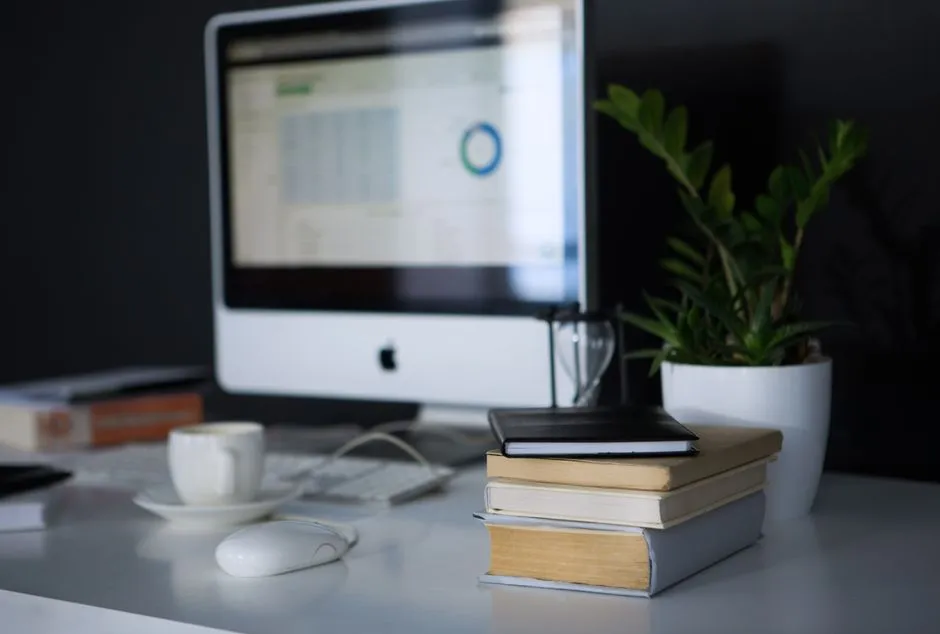
| Factor | Best | Good | Avoid |
|---|---|---|---|
| Location in home | Separate room near the front entrance (career energy enters through the front door) | Spare room in the middle of the home | Basement (stagnant, dark energy), room directly above or below a bathroom (draining energy) |
| Natural light | Windows on two walls (balanced light) | At least one window | No windows (dead energy — you’ll need serious lighting compensation) |
| Door position | Door is diagonal to where your desk will be | Door is on a side wall | Door directly behind the desk, or door directly in front of the desk |
| Room shape | Rectangular or square (balanced, stable) | Slightly irregular but fixable | L-shaped or rooms with alcoves (stagnant corners) |
| Ceiling | Flat, standard height | Slightly sloped on one side | Sloped ceiling directly over desk (pressure energy), exposed beams (cutting energy) |
| Separation from bedroom | Different floor or opposite end of the home | Adjacent room with a door | Same room as the bed (worst case — see Pillar 3) |
The front door proximity rule: In feng shui, career energy enters through the front door. A home office near the front entrance (but not directly in line with the door) receives the freshest career chi. An office in the back of the house or basement receives energy that has already circulated through the entire home — it’s tired, diffuse energy.
If your only option is the basement: Compensate aggressively. Use full-spectrum daylight bulbs (at least 5000K). Add a water feature (a small fountain) to activate stagnant energy. Use upward-facing lighting to lift the energy. Add at least two live plants. Paint the walls a warm, light color — never dark or gray.
For detailed room shape guidance, see our office feng shui layout guide.
Pillar 2: Desk Placement — The Command Position in a Home Office
The command position is non-negotiable, whether you’re in a dedicated office or a corner of your living room. This principle is rooted in evolutionary psychology: Harvard biologist E.O. Wilson’s prospect-refuge theory explains that humans feel safest and most focused when they can see approaching threats (prospect) while having protection behind them (refuge). Modern neuroscience confirms that the amygdala — your brain’s threat-detection center — stays partially activated when you can’t see what’s behind you, consuming cognitive resources you need for work. The rules are the same as any office, but the home context adds complexity:
- ✅ Diagonal from the door — you can see who enters without being directly in their path
- ✅ Solid wall behind you — creates support and stability. In a home office, this is especially important because your home life is literally behind you
- ❌ Back to the door — the most common mistake. Every time someone walks in, your energy system is startled
- ❌ Facing a wall — this is worse in a home office than a corporate one, because you’re already isolated. Facing a wall amplifies that isolation
- ❌ Desk in line with the door — energy rushes toward you, and anyone walking past can see your screen
The window question: Facing a window is better than facing a wall, but not ideal. Light and a view are good for creativity, but energy can escape through the window. If you face a window, keep blinds partially closed or add a faceted crystal to disperse energy. Never sit with your back to a window — your career will feel unsupported.
For a deep dive into desk positioning — including direction, materials, shape, and surface arrangement — our feng shui office desk guide covers all five layers.
Pillar 3: Work-Life Energy Separation — The Home Office’s Biggest Challenge
This is the most important pillar for home office feng shui, and the one most guides ignore. Separation isn’t just about physical boundaries — it’s about energetic rituals, visual cues, and daily habits that tell your energy system when to work and when to rest.
If Your Office Is in Your Bedroom
This is the hardest scenario, but it’s workable with discipline:
- Create a visual barrier. Use a room divider, a tall bookshelf, a curtain, or even a folding screen. The desk should not be visible from the bed, and vice versa. If you can’t do this physically, rotate your desk so your back is to the bed (not facing it).
- Cover your work at night. Close the laptop, cover it with a cloth, turn off all work-related lights. The visual cue matters. If you can see your work station from your bed, your brain never fully powers down.
- Never work from the bed. Ever. Not even for “just one quick email.” The bed is a yin space. When you work there, you’re programming your body to associate rest with stress. This is the single worst feng shui habit in a bedroom office.
- Use scent to define zones. A specific essential oil (peppermint, rosemary, or citrus) during work hours, and a different one (lavender, chamomile) during rest hours. Your brain learns to associate the scents with the appropriate state.
For the complete guide to bedroom-office setups, see our feng shui bedroom desk placement guide.
If Your Office Is in a Shared Living Space
- Use a rug to define the work zone. A rectangular rug under your desk and chair creates an energetic boundary. When you step off the rug, work is done. This sounds simple, but it’s one of the most effective home office feng shui tools.
- Pack up at the end of the day. If your desk is in the living room or dining room, put work materials away in a cabinet, drawer, or decorative box. The visual presence of work materials during family time is an energy leak.
- Use a dedicated work lamp. Turn it on when you start work, turn it off when you stop. This is your “open” and “closed” sign — an energetic door that you control.
The Transition Ritual
Whether you have a dedicated office or a corner of the living room, create a transition ritual that signals the end of the workday:
- Close all work applications
- Write down your top three tasks for tomorrow
- Turn off your desk lamp
- Cover your laptop or turn your monitor away
- Take three deep breaths
- Physically leave the room (or step off the work rug)
- Change your clothes (at minimum, change your slippers or put on different shoes)
This ritual is not woo-woo. It’s conditioning. After a few weeks, your nervous system learns the sequence and switches modes automatically.
Pillar 4: Colors & Elements — Balancing Your Home Office Energy
Color is one of the most powerful tools in home office feng shui — and one of the easiest to implement. The right colors activate the right energy. The wrong colors work against you.
Color by Career Goal
| Career Goal | Best Colors | Element | Where to Use |
|---|---|---|---|
| Focus & Productivity | White, light gray, pale blue | Metal (precision) | Walls, desk surface |
| Creativity & Innovation | Green, teal, light blue | Wood (growth) | Accent wall, plants, desk accessories |
| Wealth & Abundance | Purple, gold, red (small doses) | Fire + Earth | Accent pieces, artwork, desk lamp |
| Stability & Grounding | Beige, terracotta, warm yellow | Earth (stability) | Rug, curtains, chair upholstery |
| Career Path & Flow | Black, dark blue, navy | Water (career) | Small accents — don’t overdo it |
The Home Office Color Rules
- White walls are safe, but not optimal. White reflects light and creates a sense of space, but too much white is cold and sterile. If you use white walls, warm them up with wood furniture, green plants, and warm lighting.
- Avoid red as a dominant color. Red is fire energy — it’s stimulating and aggressive. A red accent piece (a lamp, a small artwork) is fine, but red walls in a home office will create anxiety and overwork.
- Green is the most universally beneficial color for home offices. It bridges wood (growth) and earth (stability) elements. It’s calming without being sedating. Use it on an accent wall, in plants, or in desk accessories.
- Match colors to your Kua number. Your personal Kua number determines your four best directions and your four best elements. If your Kua number favors wood, green is doubly good for you. If it favors metal, white and gray are better. Use our Office Feng Shui Planner to find your personal element balance.
The Five Elements in a Home Office
Every home office should contain all five elements in balance:
| Element | Color | Home Office Examples |
|---|---|---|
| Wood 🌱 | Green, brown | Live plant, wooden desk, green notebook |
| Fire 🔥 | Red, orange, purple | Desk lamp, red accent piece, candle (unlit) |
| Earth 🪨 | Yellow, beige, terracotta | Ceramic mug, clay pot, beige rug |
| Metal ⚙️ | White, gray, metallic | Metal paperweight, white walls, metal lamp base |
| Water 💧 | Black, dark blue, navy | Small fountain, black picture frame, dark blue cushion |
Quick check: Look at your home office right now. Can you identify all five elements? If one is missing, add it. If one is overwhelming, reduce it. Balance is the goal.
Pillar 5: Plants & Decor — Energize Without Cluttering
Plants are the single best home office feng shui enhancement. They’re alive, they purify air, and they bring wood element energy (growth, vitality) into your workspace. The NASA Clean Air Study found that certain indoor plants remove up to 87% of airborne toxins within 24 hours — making them both a feng shui and a health investment. But not all plants are equal, and placement matters.
Best Plants for Home Office Feng Shui
For a complete guide to office plants, colors, and decor elements, see our office feng shui plants and decor guide.
Plant Feng Shui Benefit Care Level Placement Snake Plant (Sansevieria) Protects against sharp energy, tolerates low light, releases oxygen at night Very easy Near sharp corners, entryway, or beside your desk Lucky Bamboo Wood element, stalk count carries meaning (3=happiness, 5=health, 8=wealth) Easy Left corner of desk (wealth area) Money Plant (Pothos) Wealth energy, fast-growing (symbolizes growing income), trailing vines soften harsh lines Very easy On a shelf above your desk, or trailing down from a bookcase Peace Lily Purifies air, softens aggressive energy, elegant appearance Moderate Near electronics (absorbs EMF symbolically) Jade Plant Wealth and prosperity, round leaves resemble coins, compact size Easy Left corner of desk or near the door
What to Avoid on Your Home Office Desk
| Item | Why It’s Bad |
|---|---|
| Dead or dying plants | Dead energy on your career surface — the most common desk mistake |
| Piles of paper | Stagnant chi — papers represent unfinished decisions |
| Visible cables | Chaotic energy — use cable management |
| Broken objects | Broken pen, chipped mug — broken energy = broken career |
| Clocks facing you | Countdown energy — you’re always watching time run out |
| Too many personal items | More than 3 personal items turns your desk into a shrine, not a workspace |
| Mirrors facing you | Reflects energy away from your work |
For a complete guide to desk surface arrangement, see our feng shui office desk guide.
Home Office Layout by Room Type
The Dedicated Home Office
You have a whole room just for work. This is the ideal scenario.

Layout priorities:
1. Desk in command position (diagonal from door, solid wall behind)
2. Bookshelf or storage on the wall opposite the desk (creates support)
3. A comfortable chair for reading/thinking (not at your desk) — this creates a “work” and “think” zone
4. At least one live plant — floor plant near the door, desk plant near the wealth corner
5. Natural light source to the side of the desk (not directly behind or in front)
Common mistake: Treating the dedicated office as a storage room. If you have boxes, old furniture, or random items in your office, you’re telling your career that it shares space with clutter. Clear everything that isn’t work-related.
The Bedroom Office
Your desk is in your bedroom. This is the hardest scenario, but the most common.
Layout priorities:
1. Room divider or bookshelf between bed and desk (non-negotiable)
2. Desk facing away from the bed (back to the bed, not facing it)
3. Cover work materials at night
4. Separate lighting for work zone and sleep zone
5. The bed should be farther from the door than the desk (bed is the priority in a bedroom)
For the full guide, see our feng shui bedroom desk placement guide.
The Living Room Office
Your desk is in a corner of the living room or open-plan living area.
Layout priorities:
1. Rug under the desk to define the work zone
2. Desk facing into the room (not facing a wall) — you want to feel connected to the space, not isolated
3. Foldable or stowable setup if possible — the ability to “close” the office is worth the investment
4. A tall plant or screen to create a partial visual barrier
5. Never position the desk with your back to the main living area traffic flow
Common mistake: The living room office desk becomes a dumping ground for mail, keys, and random objects. The surface rule is stricter here — if it’s not work-related, it doesn’t belong on the desk.
The Closet or Nook Office
You’ve converted a closet, alcove, or small nook into a workspace.
Layout priorities:
1. Lighting is everything — use full-spectrum daylight bulbs, not warm yellow
2. Mirror on one wall (not facing you) to expand the sense of space
3. Light-colored walls — white or pale green
4. Vertical storage — wall-mounted shelves above the desk
5. A small live plant — even a tiny succulent on the desk makes a difference
The closet office rule: Closets are inherently yin spaces (dark, enclosed, storage). You’re converting a yin space into a yang space. Overcompensate with yang elements: bright light, upward movement (vertical storage, tall plant), and the fire element (a good desk lamp).
The Dining Table Office
You work from the dining table or kitchen island.
Layout priorities:
1. This is not a permanent solution — it’s survival mode. If you’re here for more than 3 months, find a dedicated surface.
2. Use a desk caddy or portable organizer — pack everything up at the end of each work session
3. Cover the table with a work-specific tablecloth or mat during work hours, and remove it when you’re done
4. Never eat at the same spot you work — separate the energies
5. The dining table is a gathering space (earth energy). Working there alone creates a conflict between the table’s purpose and your activity.
Quick Home Office Solutions Comparison
| Problem | Solution | Cost | Time | Difficulty | Impact |
|---|---|---|---|---|---|
| Office in bedroom | Room divider or bookshelf between bed and desk | $50-150 | 30 min | Medium | ⭐⭐⭐⭐⭐ |
| No work-life separation | End-of-day ritual (close laptop, cover it, turn off lamp) | $0 | 2 min | Easy | ⭐⭐⭐⭐⭐ |
| No dedicated desk | Buy a desk — any desk. A $50 secondhand desk is infinitely better than the couch | $50-300 | 2 hours | Medium | ⭐⭐⭐⭐⭐ |
| Working from couch | Move to a table or desk. The couch is for rest. | $0 | 5 min | Easy | ⭐⭐⭐⭐⭐ |
| No natural light | Full-spectrum daylight bulbs (5000K+) + a mirror to reflect existing light | $20-50 | 15 min | Easy | ⭐⭐⭐⭐ |
| Cluttered desk surface | Remove everything, put back only essentials | $0 | 30 min | Easy | ⭐⭐⭐⭐⭐ |
| Dead plant on desk | Replace with snake plant or lucky bamboo | $10-30 | 5 min | Easy | ⭐⭐⭐⭐ |
| Back to the door | Desktop mirror to see behind you + high-backed chair | $15-100 | 15 min | Medium | ⭐⭐⭐⭐⭐ |
| Workspace blends into living space | Use an area rug to define the work zone | $30-100 | 10 min | Easy | ⭐⭐⭐⭐ |
| Overworking (always on) | Set a hard stop time + transition ritual. Physically cover your laptop. | $0 | 2 min | Easy | ⭐⭐⭐⭐⭐ |
| Missing fire element | Add a desk lamp (the most important desk accessory) | $20-50 | 5 min | Easy | ⭐⭐⭐⭐ |
| Missing wood element | Add a live plant (snake plant or pothos) | $10-30 | 5 min | Easy | ⭐⭐⭐⭐ |
A Reader’s Story: From Dining Table to Dream Office
James, a 38-year-old software developer in Portland, had been working from his dining table for two years. He’d tell himself it was temporary — just until the next project, just until the next quarter. But two years in, he was still there.
His wife hated it. Every evening, they’d clear his monitors and cables to set the table for dinner. Every morning, he’d set up again. The dining table was never fully a dining table, and never fully a desk. It was a half-space doing half-work for half a life.
“The worst part wasn’t the setup and teardown,” James said. “It was that I never felt like I was really working, and I never felt like I was really home. I was always in between.”
They converted a small walk-in closet — 5 feet by 6 feet — into a dedicated office. They painted the walls pale green (wood element, growth). They installed a floating desk and bright daylight LED strips. They added a small mirror on one wall to expand the space. A tiny snake plant sat on a floating shelf above the monitor.
“It’s the size of a postage stamp,” James said. “But when I close that door at 6 PM, I’m done. I’m home. My wife got her dining table back. I got my career back. And the closet — which was literally just storing old coats — became the most valuable room in the house.”
The lesson: a dedicated workspace, no matter how small, is worth more than a large shared space. Energy respects boundaries. Give it a boundary, and it will reward you.
Recommended Feng Shui Items for Home Office
Important: The most effective home office improvements are free — defining zones, creating transition rituals, and clearing clutter. These items are optional enhancements:
- Room divider or folding screen — Creates separation between work and rest zones. Essential for bedroom offices. Choose wood (growth) or fabric (earth). $50-150.
- Area rug — Defines your work zone. A rectangular rug under your desk and chair creates an energetic boundary. $30-100.
- Full-spectrum daylight lamp — Compensates for lack of natural light. Look for 5000K+ color temperature. Position to the side of your desk, not directly in front. $30-60.
- Snake plant or lucky bamboo — Live plants bring wood element energy. Snake plant tolerates low light and releases oxygen at night. $10-30.
- Desktop mirror (convex) — Restores command position when you can’t see the door. Also useful for expanding small spaces. $5-15.
🛡️ Small Peach Wood Sword — 桃木辟邪镇宅
Peach wood dispels sha qi and stabilizes home energy. Ideal for home offices with sharp corners, angled walls, or external poison arrows. Place near windows or entryway to guard against negative energy from outside.
GET PROTECTED → $59.99
🖥️ Ready to optimize your home office for career success?
Place your desk, map your elements on the bagua grid, and get personalized feng shui recommendations based on your Kua number — free, interactive, and takes 2 minutes.
FAQ — Feng Shui Home Office
What is the best room for a home office in feng shui?
A dedicated room near the front entrance of the home is ideal. The room should be rectangular or square, have at least one window for natural light, and allow your desk to be in the command position (diagonal from the door, solid wall behind you). Avoid basements (stagnant energy), rooms above or below bathrooms (draining energy), and converted garages (the energy of the car’s former presence lingers). If you must use a basement, compensate with full-spectrum lighting, a water feature, and live plants.
Is it bad feng shui to have a desk in the bedroom?
Yes, it’s never ideal. The bedroom is a yin space (rest, intimacy, recovery), while a desk is yang (work, ambition, activity). Having both in the same room creates energetic conflict. If you have no choice, non-negotiable fixes include: a room divider between bed and desk, covering work materials at night, using separate lighting for work and sleep, and never working from the bed. See our feng shui bedroom desk placement guide for the complete strategy.
How do I separate work and home energy in a small apartment?
Three simple tools: (1) An area rug under your desk defines the work zone. When you step off the rug, work is done. (2) A dedicated work lamp that you turn on when you start and off when you finish creates an “open/closed” ritual. (3) Pack everything work-related into a drawer or decorative box at the end of the day. The visual absence of work materials during non-work hours is powerful feng shui.
What colors are best for a home office?
Green is the most universally beneficial color for home offices — it bridges the wood element (growth, creativity) and the earth element (stability). Pale blue and light gray support focus and precision (metal element). White walls are safe but should be warmed up with wood furniture, plants, and warm lighting. Avoid red as a dominant color (too stimulating), and avoid dark gray or black walls (too draining). For personalized guidance, use our Office Feng Shui Planner.
What plants are best for a home office?
Snake plant (Sansevieria) is the best all-around choice — it tolerates low light, protects against sharp energy, and releases oxygen at night. Lucky bamboo is excellent for desk placement (wealth corner). Money plant (Pothos) symbolizes growing income and is nearly impossible to kill. Peace lily purifies air and softens aggressive energy. Jade plant symbolizes wealth and prosperity.
How do I stop overworking in a home office?
Create a hard stop ritual. At your designated end time: close all work applications, write down your top three tasks for tomorrow, turn off your desk lamp, cover your laptop with a cloth, and physically leave the room (or step off your work rug). Change your clothes — even just changing your slippers. This ritual trains your nervous system to transition out of work mode. The key is consistency: do it every day at the same time.
Can I feng shui a home office in a closet or small nook?
Yes, but you need to overcompensate with yang energy. Closets are inherently yin (dark, enclosed, storage). Use full-spectrum daylight bulbs (5000K+), paint the walls a light color, add a mirror on one wall (not facing you), use vertical storage above the desk, and include at least one live plant. A small snake plant on a floating shelf makes a surprising difference. The key is making the space feel alive and intentional, not like an afterthought.
What’s the worst home office feng shui mistake?
Working from bed. Even one email. The bed is the most yin space in your home — it’s designed for rest, recovery, and intimacy. When you work from bed, you’re programming your nervous system to associate rest with stress. This damages both your sleep quality and your work focus. The second worst mistake is having no transition ritual — without it, you’re never fully working and never fully resting. You exist in a permanent state of “in between.”