
TL;DR: In feng shui, mirrors in the bedroom should be placed on side walls opposite windows or closets — never directly facing the bed, the bedroom door, or reflecting clutter. Proper placement amplifies light and positive energy (qi), while wrong placement can disrupt sleep and create restless energy. Use a cloth cover, remove mirrors overnight, or opt for sliding closet doors as a safer alternative.
Max Vakhtbovych
What Does Feng Shui Say About Mirrors in the Bedroom?
As part of broader bedroom feng shui principles, mirrors have a nuanced role. Feng shui treats mirrors as powerful energy amplifiers. In traditional practice, a mirror is called a “water element” tool — it reflects, doubles, and redirects the qi (energy) flowing through a space. Because the bedroom is where you recharge and restore, feng shui practitioners generally recommend minimizing mirror presence there.
“The bedroom is a sanctuary for rest. Mirrors, by their nature, stir energy rather than calm it — making them a double-edged sword in feng shui.”
This doesn’t mean you need to banish every reflective surface. The key is where you place mirrors and how you manage them. When positioned correctly, a mirror can brighten a dark corner, make a small room feel spacious, and amplify morning light — all beneficial outcomes in feng shui.
Modern environmental psychology supports part of this wisdom: research on prospect-refuge theory (Appleton, 1975) shows that humans feel more secure when they can see the entrance without being directly exposed. A mirror placed strategically can extend your visual field — but only if it doesn’t create a sense of being watched while you sleep.
Beyond the bedroom, our complete feng shui mirror guide covers whole-house placement. For a deeper theory dive, our surprising truth about mirrors in feng shui article explains the cultural and elemental mechanics. If the mirror is already there and facing the bed, see our mirror facing bed cure.
Common Mirror Mistakes in the Bedroom (❌ vs ✅)
| ❌ Don’t Do This | ✅ Do This Instead |
|---|---|
| Mirror directly facing the bed | Place mirror on a side wall, angled away from the bed |
| Mirror reflecting the bedroom door | Position mirror so it doesn’t bounce door energy straight at the bed |
| Large mirrored closet doors open while sleeping | Cover mirrors at night or use sliding frosted panels |
| Mirror reflecting a messy closet or clutter | Keep reflected areas tidy and organized |
| Multiple mirrors creating a kaleidoscope effect | Limit to one statement mirror or use built-in closet mirrors |
Mirror placement often goes hand in hand with plant placement — both shape how light and energy move through the room. For a broader perspective on window-related energy flow, see our windows and feng shui guide.
Quick Self-Check: Is Your Mirror Placement Causing Issues?
Ask yourself these questions:
- ☐ Can you see your own reflection when lying in bed?
- ☐ Does the mirror face the bedroom door directly?
- ☐ Do you wake up startled seeing shadows in the mirror?
- ☐ Is your closet fully mirrored and always open?
- ☐ Does the mirror reflect your bed headboard?
If you checked two or more boxes, your mirror placement is likely creating feng shui friction. Let’s fix that.
The 5 Golden Rules of Mirror Placement in the Bedroom
Rule 1: Never Face the Bed Directly
This is the most important rule in feng shui mirror placement. When a mirror reflects your bed while you sleep, the constant movement and energy disturbance can fragment your rest. In feng shui terms, the mirror creates “poison arrows” — sharp, restless energy that interferes with yin (restorative) energy the bedroom needs.
Practical fix: Reposition the mirror to a wall perpendicular to the bed, or choose a piece of art instead of a mirror for the wall behind or beside your bed.
Rule 2: Place Mirrors on Side Walls, Not Behind the Bed
The wall behind the headboard should remain mirror-free. This wall represents your “support” in feng shui — it’s your backing, your stability. A mirror behind the bed literally reflects away your support system.
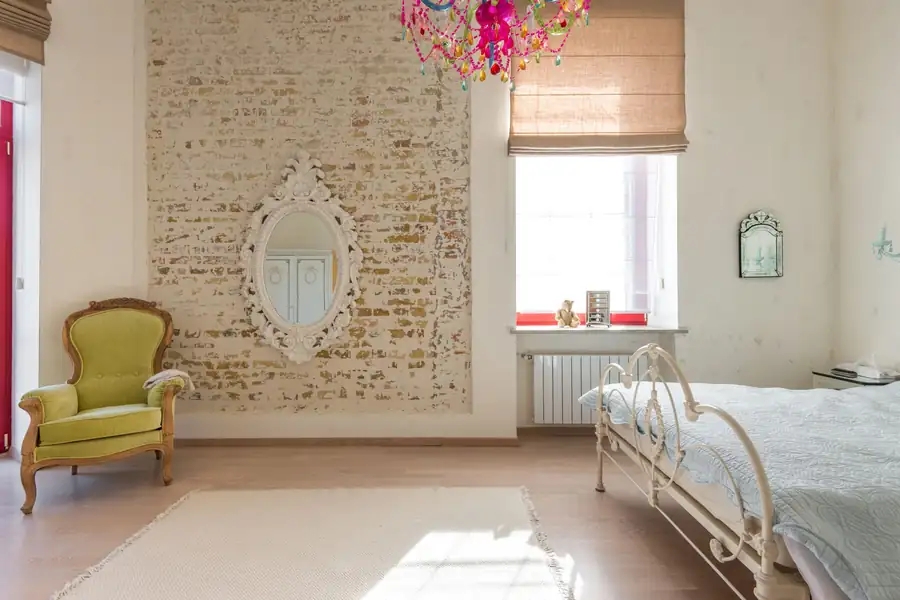
Side walls are ideal for mirrors. If your bedroom has a window on one wall, placing a mirror on the opposite wall can reflect natural light deeper into the room, boosting yang energy during the day without disturbing sleep at night.
A caveat on mirror-window placement: Traditional feng shui cautions against placing a mirror directly opposite a window that faces “sha qi” — harmful external energy from road curves, sharp building corners, power poles, or narrow alleyways (known as “poison arrows” in classical feng shui). Before placing a mirror across from a window, check what you can see outside. If the view is peaceful (garden, open sky, trees), reflect away. If the view shows harsh or chaotic elements, either relocate the mirror or use a frosted/diffused panel instead of a clear reflection.
Rule 3: Avoid Reflecting the Door
When a mirror reflects the bedroom door, it bounces incoming qi energy directly across the room. This can feel jarring — like energy is being pushed back at whoever enters. In feng shui, this is called “rushing sha” (rushing negative energy).
Practical fix: Angle the mirror so it reflects something pleasant — a plant, a piece of art, or a window with a nice view — rather than the doorway itself.

dada _design
Rule 4: Cover or Conceal Closet Mirrors at Night
Many modern bedrooms come with mirrored closet doors. If yours does, you have several options:
- Cover with fabric: Hang a lightweight curtain or throw over mirrored panels before sleep
- Use frosted film: Apply removable adhesive frosted vinyl to the mirrors
- Sliding doors: If possible, switch hinged mirrored doors to sliding panels
- Reposition the bed: Move your bed so you can’t see the mirror while lying down
Even if you don’t feel disturbed, the subtle energy agitation from seeing movement in a mirror during sleep can accumulate over time. Think of it as background noise for your nervous system.
Rule 5: Keep Reflected Areas Clean and Clutter-Free
A mirror amplifies whatever it reflects. If your mirror shows a cluttered closet, messy desk, or disorganized corner, it doubles the chaotic energy in the room. This is why feng shui emphasizes tidiness — especially in the bedroom.
Pro tip: Before placing a mirror, survey exactly what it will reflect. If it shows something beautiful — a plant, natural light, a calming art piece — you’ve found the perfect spot. If it shows chaos, either clean up the reflected area or relocate the mirror.
Best Mirror Shapes and Frames for the Bedroom
In feng shui, the shape of a mirror carries meaning:
- Round or oval mirrors: Soft edges promote gentle, flowing energy. Ideal for bedrooms.
- Square mirrors: Balanced and stable, but the sharp corners can create minor “cutting” energy. Fine if placed away from the bed.
- Rectangular mirrors: Acceptable for functional use (vanity mirrors), but avoid tall, narrow mirrors near the bed.
- Broken or cracked mirrors: Always replace immediately. Damaged mirrors carry stagnant, negative energy.
Frame material also matters: wood frames add grounding earth energy, metal frames amplify the water element (stronger energy), and frameless mirrors sit neutrally between elements.
Room-by-Room Mirror Guidelines
Master Bedroom
The master bedroom deserves the most careful mirror treatment. This is where intimate energy lives our complete bedroom feng shui guide covers this in detail — for couples and individuals alike. Place mirrors on walls that don’t face the bed, ensure closet mirrors are concealed at night, and avoid anything that creates a “watched” feeling.
If you’re in a relationship, feng shui tradition holds that a mirror reflecting the couple’s bed can introduce third-party energy. While this sounds superstitious, the underlying principle is about privacy and psychological comfort — and those matter for relationship health regardless of belief.
Guest Bedroom
Guest rooms are more forgiving. A modest mirror on a side wall or above a dresser is usually fine, as long as it doesn’t directly face where guests will sleep. The key is ensuring visitors feel comfortable and unselfconscious.
Small Bedrooms
In small rooms, mirrors are almost essential for creating a sense of space. Our room layout guide covers spatial planning in feng shui. is balancing function with feng shui: use one well-placed mirror rather than several smaller ones, keep it clean and uncluttered, and position it to maximize light rather than reflection of the bed.
Quick Fixes: No-Mirror Solutions for Mirror Problems
If you can’t move or remove a mirror, try these remedies:
| Problem | Free Fix | Cost | Effectiveness |
|---|---|---|---|
| Mirror faces bed | Cover at night with a decorative cloth | $0 | High |
| Large mirrored closet | Apply removable frosted film | $10-20 | High |
| Mirror reflects clutter | Tidy the reflected area | $0 | Medium |
| Too many mirrors | Remove all but one statement piece | $0 | High |
| Can’t reposition furniture | Angle the mirror away from the bed | $0 | Medium |
Recommended Feng Shui Items for Your Bedroom
These items complement proper mirror placement and enhance bedroom harmony:
- Natural cotton curtains: Soft light filtering through fabric creates gentle yin energy without the sharpness of mirrors
- Wooden nightstands: Grounding furniture that supports the “stable backing” principle behind your bed
- Lucky bamboo (2 stalks): Represents relationship harmony — place on a nightstand away from mirrors
- Salt lamp: Provides warm, diffused light that softens the room’s energy (use with caution — see safety note)
- Soft area rug: Adds warmth and absorbs sound, creating a calmer acoustic environment
Note: The most effective feng shui improvements are free. Moving furniture, covering mirrors, and decluttering cost nothing and often make the biggest difference. Traditional feng shui has worked for thousands of years without requiring you to shop.
Bagua Map Note: Mirror Placement by Direction
Different feng shui schools approach mirror placement differently:
- Eight Mansions (Ba Zhai): Uses your personal Kua number to determine auspicious directions. Mirrors should amplify energy in your favorable sectors (wealth, health, relationships, wisdom).
- Flying Stars (Fei Xing): Tracks annual energy shifts. A mirror in the current year’s “illness sector” can worsen health energy — check the annual flying star chart.
- Western simplified approach: Focus on practical placement — never face the bed, always reflect something positive.
If you’re new to feng shui, start with the practical approach above. Once you’re comfortable with the basics, you can explore directional methods using a luo pan (feng shui compass) for more precision.
FAQ — Where to Put Mirror in Bedroom
Is it bad feng shui to have a mirror in the bedroom?
Not inherently bad — it depends on placement. A mirror that faces the bed or reflects the door creates restless energy. A mirror on a side wall that reflects light or a pleasant view is generally fine. The key principle is: mirrors should enhance comfort, not disturb it.
Can I keep a mirror above my dresser in the bedroom?
Yes, as long as the mirror doesn’t directly face your bed. A dresser mirror on a wall perpendicular to the bed is acceptable. If you can see your reflection while lying down, consider angling it or adding a cover.
Should I cover mirrors at night for feng shui?
Yes — it is. Many practitioners consider it essential. A lightweight cloth or towel works fine. The key is preventing restless energy from disturbing your sleep.
What if my bedroom has mirrored closet doors?
See Rule 4 above for detailed solutions. The frosted film option (under $20) is usually the most permanent fix.
How many mirrors should be in a bedroom?
One statement mirror is ideal. Multiple mirrors multiply energy and can create a disorienting effect. If you need functional mirrors (dresser, closet), consolidate into one area and conceal them at night. Quality over quantity.
Can a mirror bring good luck to a bedroom?
When placed correctly — reflecting natural light, a beautiful view, or positive energy — mirrors can enhance a room’s feng shui. The mirror amplifies whatever it shows, so positioning it to reflect something uplifting is the feng shui way to attract positive energy.
What mirror shape is best for a bedroom?
Round or oval mirrors are preferred in feng shui because their curved edges promote gentle, flowing energy. Square mirrors are acceptable if placed away from the bed. Avoid broken, cracked, or heavily ornate mirrors with sharp points.
References & Further Reading
This article draws on classical feng shui principles and modern environmental psychology. Key sources include:
- Appleton, J. (1975). The Experience of Landscape: Exploring Nature in the Environment. Harvard University Press. Introduced prospect-refuge theory, explaining why humans feel safer when they can observe their environment without being directly exposed. Supports the feng shui principle of strategic mirror placement for visual awareness.
- Chan, T.T. (1983). The Internal Science of Feng Shui: The Science of Living Spaces. Blue Poppy Press. Classical text on the Eight Mansions (Ba Zhai) school, covering Kua numbers and auspicious direction alignment.
- Loh, S.K. (1999). The Complete Illustrated Course in Feng Shui. Watkins Publishing. Overview of Flying Stars (Fei Xing) methodology and annual energy shifts affecting mirror placement.
- Diamond, M. (2006). Feng Shui Your Home for Love: The Intimate Connection Between Sacred Space and Deep Relationships. Sounds True. Western interpretation of bedroom feng shui principles, including mirror and relationship energy considerations.
Note: Classical feng shui traditions vary by school and region. The practical guidelines in this article prioritize outcomes that are consistent across major approaches. For personalized readings, consult a practitioner using a luo pan (compass) for your specific layout.
More Bedroom Feng Shui Tools
Want to go beyond mirror placement? These tools help you map and optimize your entire bedroom:
- Free Bedroom Feng Shui Planner — Interactive tool that maps your bedroom layout and gives feng shui-based furniture placement suggestions, including mirror and relationship energy considerations. Try it free →
- Bedroom Feng Shui Report — Personalized analysis with specific mirror, bed placement, color, and element-balancing recommendations for your room. Get your report ($0.99) →
Final Thoughts
Placing a mirror in your bedroom according to feng shui comes down to one guiding principle: does this mirror help you rest, or does it stir energy when you need stillness? Most mirror conflicts in the bedroom trace back to one simple fact — the mirror is facing the bed. Move it to a side wall, cover it at night, and keep the reflected area tidy. Within a week, you may notice a subtle but real difference in your sleep quality. For optimal sleep energy, check our sleeping directions guide.
Feng shui is not about fear or rigid rules. It’s about creating a space that supports how you want to feel. If your bedroom mirror passes the “do I feel calm?” test, you’re already doing it right.